
Dining Etiquette by Country
- United States
- France
- Germany
- Italy
- United Kingdom
- South Korea
- Japan
- China
- Vietnam
- Thailand
- Indonesia
- Philippines
- India

🇺🇸
United States
🇺🇸 United States
- It’s generally expected to leave around 18–20% of the bill as a tip at restaurants. With rising costs and service charges, some places now suggest 20% or more, though it does vary depending on the situation and the venue.
- Taking leftovers home in a to-go box is completely normal. If anything, it’s often seen as practical rather than leaving food behind on the table.
- Individual ordering is the norm, and casual conversation throughout the meal is common.
- In more formal settings, resting your elbows on the table for extended periods is sometimes considered poor manners. That said, in casual settings these days, people tend to be much more relaxed about it.
🇫🇷
France
🇫🇷 France
- In traditional French dining etiquette, it’s considered natural to keep both hands visible on the table — though it’s more of a “wrists resting on the edge” kind of thing rather than placing your full arms on the table.
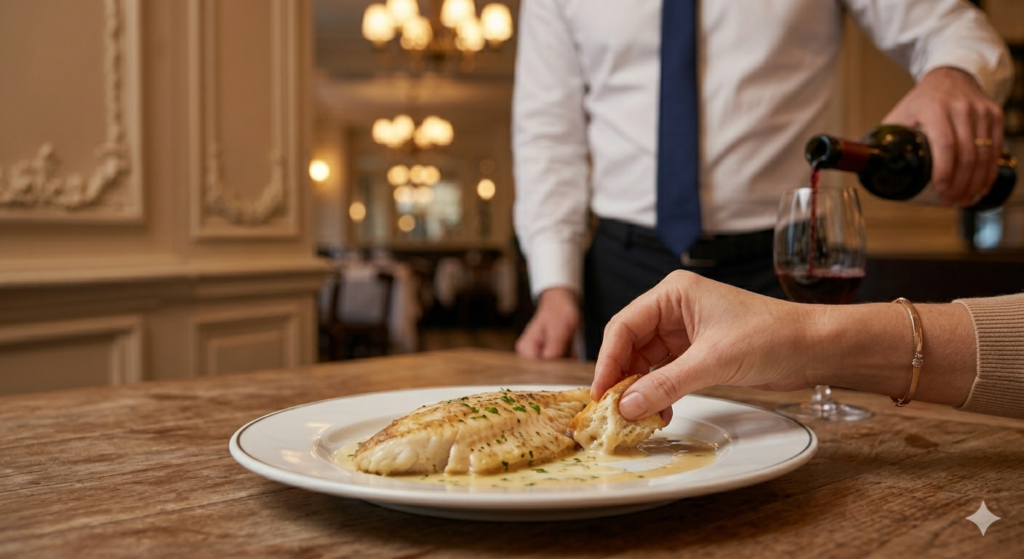
- Bread is generally torn into small, bite-sized pieces by hand rather than cut with a knife.
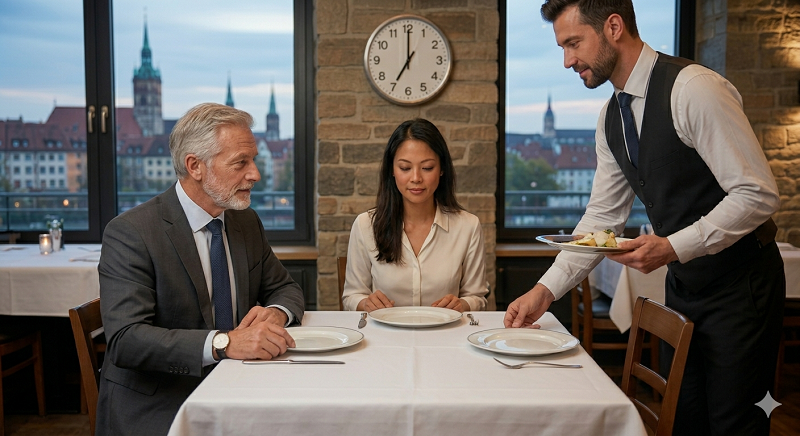
- It’s common to wait until everyone has been served before starting to eat.
- In France, meals are often seen as a social occasion rather than just eating, so rushing or leaving the table quickly can sometimes come across as rude depending on the context.
- Wine is typically poured by the host, and in more formal settings there’s often an unspoken expectation not to keep refilling your own glass. That said, things tend to be fairly flexible depending on the situation.
- Using bread to wipe up sauce from your plate is traditionally seen as a compliment to the food — a way of saying you enjoyed it. However, in very upscale restaurants, opinions can vary, so it’s safer to read the room.
🇩🇪
Germany
🇩🇪 Germany
- Making eye contact when clinking glasses is a well-known part of the culture. There’s even a saying that failing to do so brings seven years of bad luck — though in practice it’s often said more as a lighthearted joke than a serious superstition.
- Germans generally place a lot of importance on punctuality, so being late to a business meal is often frowned upon.
- Placing your fork and knife parallel on the plate is the widely recognized signal that you’ve finished eating.
- Splitting the bill (going Dutch) is relatively natural in Germany. That said, there are plenty of situations where one person picks up the tab — it depends on the relationship and the context.

🇮🇹
Italy
🇮🇹 Italy
- Pasta is generally eaten with just a fork. Using a spoon as a support is something you’ll often see in tourist areas, but it’s less common in traditional local dining culture.
- Cappuccino has a strong reputation as a morning drink. Ordering one right after a meal might make you stand out as a tourist, though in many places these days people don’t make a big deal of it — it’s more of a cultural custom than a hard rule.
- It’s generally not common to sprinkle cheese on seafood pasta. It’s less of an absolute taboo and more of a “that’s just not how it’s done” kind of thing.
- Italian restaurants typically let you linger as long as you like, which means you’ll usually need to ask for the bill rather than having it brought automatically.

🇬🇧
United Kingdom
🇬🇧 United Kingdom
- In traditional British table manners, holding the fork in the left hand and the knife in the right is the standard approach.
- Making too much noise while drinking tea is generally considered poor manners. In more formal settings, people tend to be a bit more mindful of this.
- Resting your elbows on the table for long periods has traditionally been considered impolite. These days, though, things are a lot more casual in many settings.
- There are well-known conventions around the position of your fork and knife to signal whether you’re pausing or finished, though in practice the interpretation can vary slightly from restaurant to restaurant.

🇰🇷
South Korea
🇰🇷 South Korea
- Traditionally, it’s customary to wait until the eldest person at the table picks up their utensils before starting to eat.
- In Korea, it’s generally expected to keep your rice bowl and soup bowl on the table rather than lifting them to eat. This is often cited as a notable contrast with Japan.
- It’s common to use a spoon for rice and soup, and chopsticks for side dishes.
- In traditional dining culture, there’s a custom of slightly turning your head away when drinking in front of someone older. Younger generations tend to be more relaxed about this than before, though.
- Sharing side dishes at the table is the norm.
- Traditionally, one person paying for the whole table was a strong part of the culture. Recently, especially among younger people and in more casual settings, splitting the bill has become very common. That said, some people — particularly older generations — may still find going Dutch a little awkward depending on the situation.
🇯🇵
Japan
🇯🇵 Japan
- Saying “itadakimasu (いただきます)” before a meal and “gochisousama (ごちそうさま)” after is a well-known part of everyday dining culture.
- Lifting your rice bowl and soup bowl to eat is considered natural and appropriate.
- Sticking chopsticks upright into rice is generally avoided, as it’s associated with funeral rituals.
- Passing food directly from one pair of chopsticks to another is also something people tend to avoid, as it’s connected to cremation customs.
- When helping yourself from shared dishes, it’s common to use serving chopsticks or the reverse end of your own chopsticks — though using a dedicated serving utensil is increasingly preferred for hygiene reasons.
- Making some noise while eating ramen or soba is generally considered acceptable. In higher-end or Western-style restaurants, it’s probably worth being a little more mindful depending on the setting.
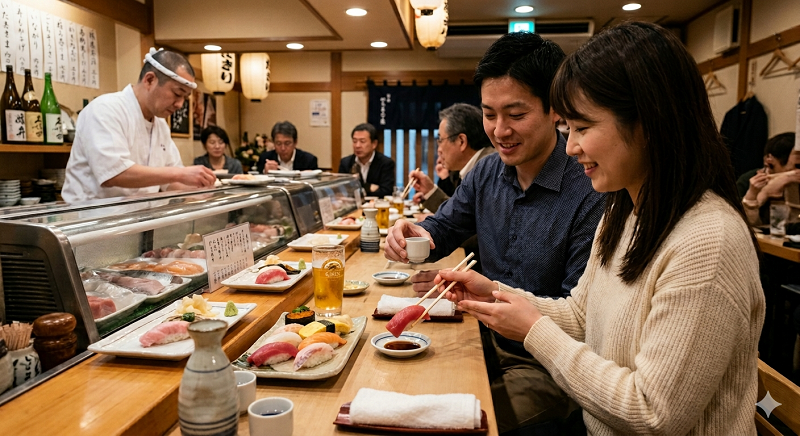
- When dipping sushi in soy sauce, the traditional style is to lightly dip the fish (neta) side rather than the rice, and to avoid using too much.
- Pouring drinks for others at the table is a well-known custom in Japan, particularly at drinking gatherings. That said, things have become more relaxed in recent years.
🇨🇳
China
🇨🇳 China
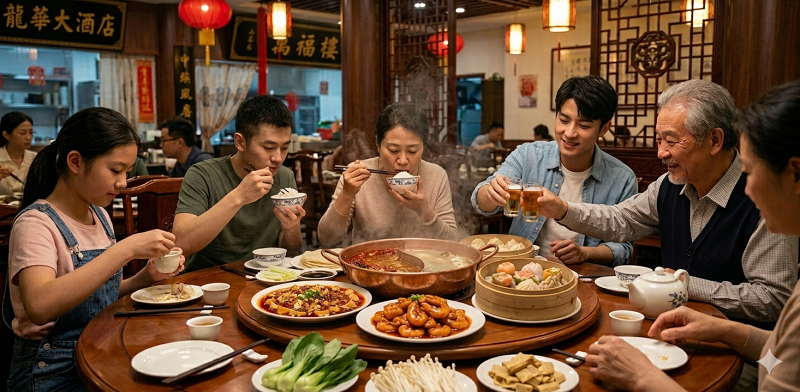
- Holding your rice bowl while eating is a natural and common practice in China.
- Traditionally, leaving a little food on your plate was seen as a sign that you’d been well fed. Recently, however, there’s been a growing push to reduce food waste, so attitudes have been shifting.
- When toasting, holding your glass slightly lower than the other person’s is a recognized gesture of respect.
- Using chopsticks to point at someone is generally considered rude.
- At a rotating round table, it’s usually the custom for the eldest person or host to be the first to turn it.
- In business or formal dining situations, the host typically expects to pay. That said, in major cities, splitting the bill is becoming more common among younger diners.
- Tapping the table lightly with two fingers as a thanks when someone pours your tea is a custom often associated with the Guangdong region. It’s widely known across China, but it’s not necessarily practiced everywhere, and familiarity with it can vary by region.
🇻🇳
Vietnam
🇻🇳 Vietnam
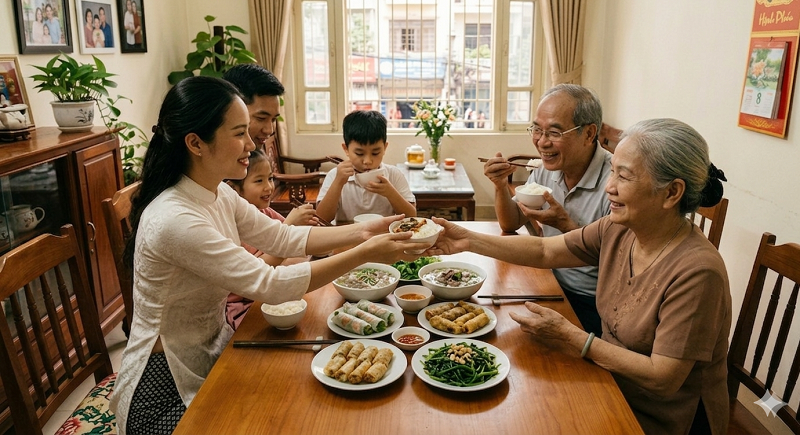
- There’s a strong culture of deferring to elders, and it’s common to offer food to older guests first with a polite expression before starting.
- Passing food or dishes with both hands is seen as a respectful gesture.
- Lifting your rice bowl to eat is the norm.
- Rather than eating directly from shared dishes, it’s generally considered more polite to serve food onto your own bowl first.
- Sticking chopsticks upright into rice or using them to point at people is generally something to avoid.
- In some fishing communities, there’s a tradition of not flipping fish while eating — though this isn’t a universal rule across the country.
- Traditionally, leaving a small amount of food was sometimes interpreted as a sign of having had enough. Recently, though, there’s also been a growing awareness around not wasting food.
🇹🇭
Thailand
🇹🇭 Thailand
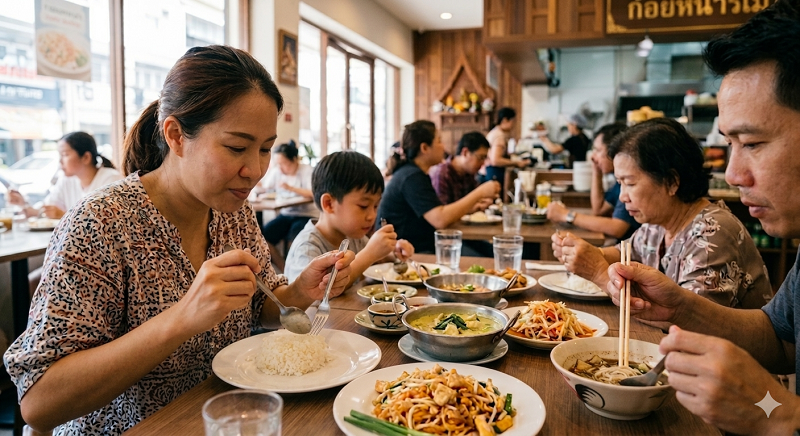
- In Thailand, the spoon is generally the main eating utensil, while the fork is used more as a tool to push food onto the spoon.
- Traditionally, putting the fork directly into your mouth isn’t the done thing. In modern restaurants, though, people tend to be fairly relaxed about this depending on the setting.
- Chopsticks are mainly used for noodle dishes.
- Since most dishes are served in bite-sized portions, knives are not commonly used.
🇮🇩
Indonesia
🇮🇩 Indonesia
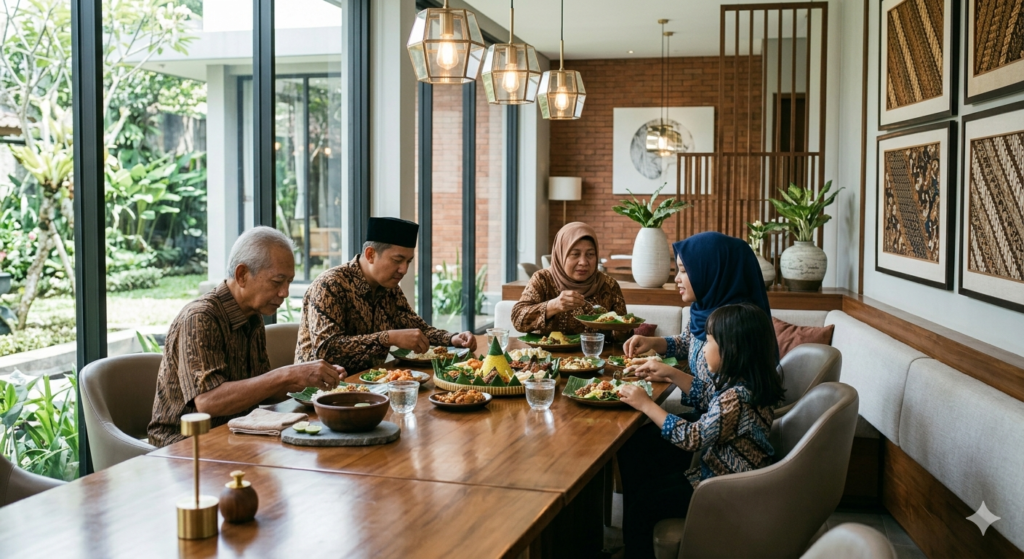
- Eating and passing food with the right hand is the traditional norm.
- Washing hands before eating is considered important. In traditional restaurants, a small bowl of water for rinsing hands (kobokan) is sometimes provided.
- Spoons and forks are the most commonly used utensils, while knives are less frequently used.
- Showing consideration for elders first is generally the expected approach at the table.
- Indonesia is incredibly diverse in terms of regions and religions, so dining customs can vary a great deal from place to place. In Muslim-majority areas, it’s a basic courtesy to be mindful of pork and alcohol.
🇵🇭
Philippines
🇵🇭 Philippines
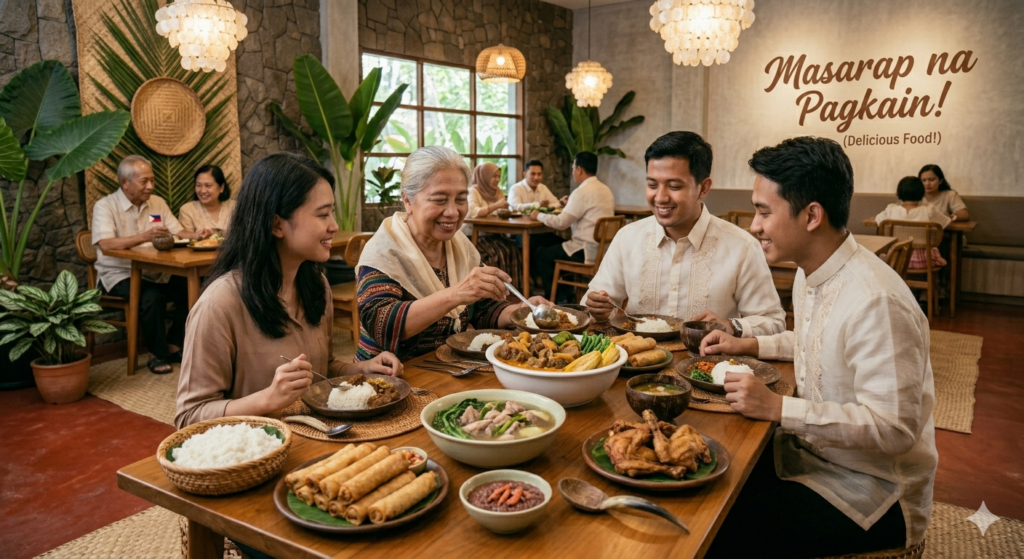
- Respect for elders is a strong part of the culture, and it’s generally expected to wait for the oldest person at the table to begin eating first.
- Using both a spoon and fork together is a very common way of eating.
- Family-style dining — sharing dishes at the table — is the norm, and there’s often an unspoken awareness around not immediately taking the last serving without checking if others want it.
- “Kain na” is a casual, friendly expression roughly meaning “let’s eat” and is commonly used to invite people to the table.
- In many social settings, it’s considered polite to eat at least a little something when invited to a meal.
🇮🇳
India
🇮🇳 India
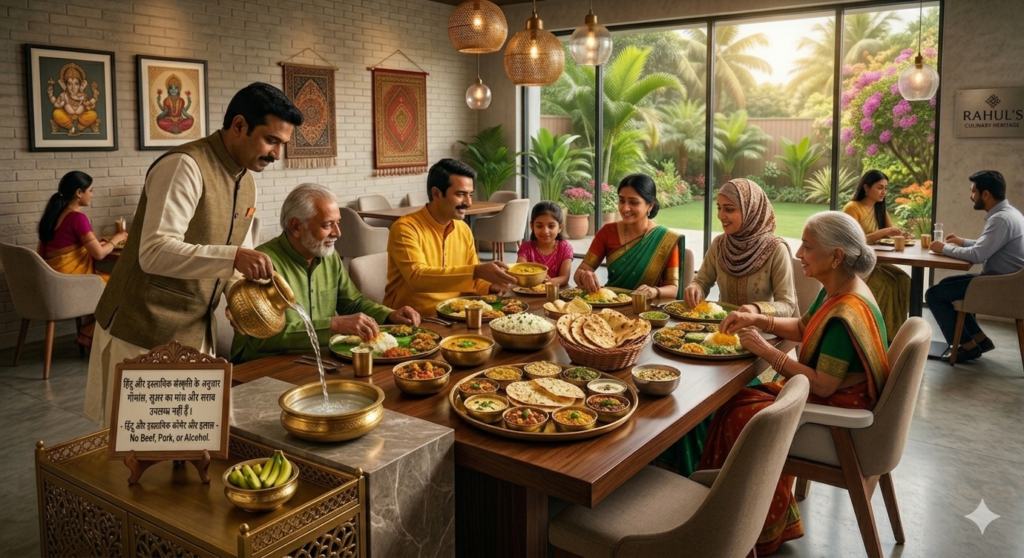
- Eating with your hands is a widespread tradition in many parts of India, so washing hands before a meal is considered essential.
- Using the right hand to eat and pass food is the general custom. Being mindful about not using the left hand is still very much part of the culture.
- In Hindu communities, avoiding beef, and in Muslim communities, avoiding pork and alcohol, is considered standard etiquette.
- In many regions, hosts will keep offering food to guests, so declining politely with something like “I’m full, thank you” tends to go over more smoothly than a flat no.
- India is often noted for having one of the highest proportions of vegetarians in the world — though dietary habits vary enormously by region, religion, and background.
Wrapping Up
Looking into all of this, I got the sense that dining etiquette is less about “right” and “wrong” and more about how much consideration you’re showing for the people around you. And even within a single country, things can vary a lot depending on the region, generation, or even the household.
The safest approach, they say, is to watch what the locals do and follow their lead.
When in doubt, observe quietly — and once you’ve got a feel for the room, go with the flow. Apparently, that alone takes care of most of the common slip-ups.
This post is based on various sources and travel accounts, so please don’t treat any of it as an absolute rulebook. Think of it as light reading and a general reference. 🙂
If you’ve had firsthand experience with dining customs I haven’t covered here, feel free to share in the comments — I’d love to hear about it. I’ve only scratched the surface with a handful of countries here, but there are really so many fascinating little dining traditions tucked away in countries all over the world. It’s a shame I couldn’t cover them all. I’m hoping to look into more of them and write about them again another time.
* Images in this post were AI-generated to aid understanding.